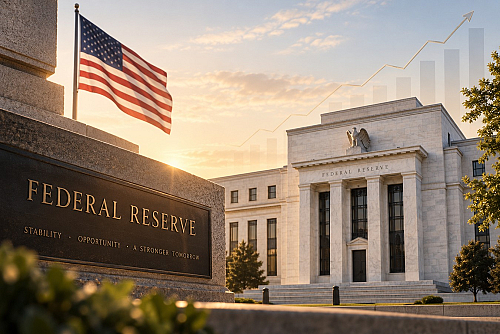
Investor optimism around a potential U.S. Federal Reserve rate cut in September has cooled significantly, casting a shadow over global equity markets. Early pre-market data show U.S. share futures slipping, S&P 500 futures down approximately 0.2% and Nasdaq futures contracting around 0.3%, signaling a subdued Wall Street opening.
Despite this caution, global equities remain relatively buoyant. The MSCI world share index held steady near last Friday’s record highs, while Asia saw strong gains: Chinese blue-chip stocks surged more than 2% to their highest level since 2022, and Japan’s Nikkei rose 0.4%.
In Europe, the STOXX 600 index inched lower by around 0.2%. A notable drag came from renewable energy stocks, particularly Denmark’s Ørsted, whose shares tumbled approximately 17% after the U.S. government ordered a halt to one of its offshore wind projects near Rhode Island.
Analysis
Markets seemed primed for a dovish pivot from the Federal Reserve; futures had priced in an 84% chance of a 25-basis-point cut in September and anticipated at least 100 basis points of easing by mid-2026. However, as investors re-evaluate economic signals and policy uncertainty remains, that momentum is slowing.
Asia’s performance suggests continued investor confidence in regional recovery, while Europe’s renewable energy sector was jolted by regulatory intervention, highlighting how geopolitics and policy shifts can swiftly reverse market trends.
Federal Reserve Policy Outlook
Investor enthusiasm for a September rate cut by the U.S. Federal Reserve has softened after an initial wave of optimism. Futures markets still price in a high probability, around 84%, that the Fed will trim rates by 25 basis points at its September meeting. However, traders are tempering expectations for a more aggressive easing cycle. By mid-2026, markets now anticipate about 100 basis points of total cuts, reflecting a slower pace of monetary loosening than previously hoped.
The moderation stems from mixed economic signals. While inflation has eased from its peaks, it remains above the Fed’s 2% target, keeping policymakers cautious. At the same time, resilient U.S. labor data and steady consumer spending suggest the economy is not yet under pressure to justify rapid easing.
For investors, this recalibration means the Fed is more likely to pursue a measured and data-dependent approach, rather than a swift pivot. That uncertainty has weighed on U.S. equity futures, dampened the recent rally in global stocks, and strengthened the U.S. dollar, as markets re-align expectations with the Fed’s likely cautious stance.