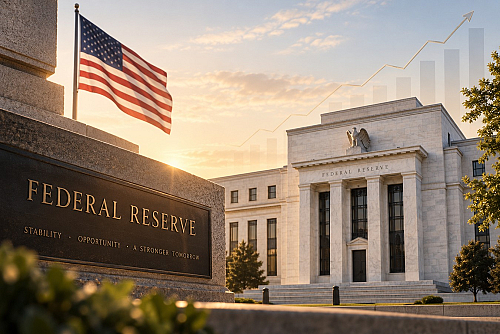
After holding its benchmark interest rate at 4.25%-4.50% for much of 2025, the U.S. Federal Reserve is widely expected to deliver its first rate cut in the current policy meeting.
What’s Driving the Shift
• Cooling labor market. Recent data indicate a sharp slowdown in job creation, including significant downward revisions to prior months' employment figures, which undermines the case for maintaining higher rates.
• Persistent inflation pressures. Inflation remains above desired levels, and tariffs are contributing to higher import prices. The Fed is keeping a close eye on how these pressures play out.
• Balancing act. The Fed must weigh its dual mandate: promoting maximum employment and controlling inflation. With signs of economic softening, there is increased pressure to start easing. But doing so too aggressively could risk reigniting inflation or destabilizing longer-term expectations.
What to Expect: Pace & Path
• The rate cut expected at this meeting is modest: 25 basis points is the consensus view.
• After that, most analysts believe there will be a gradual series of cuts, possibly three more before the end of 2025, and additional ones into mid-2026.
• However, the Fed is likely to proceed with caution. Inflation, especially with external factors like tariffs, remains a wildcard.
Risks & Uncertainties
• Tariff effects. Import costs due to tariffs could continue putting upward pressure on prices. The Fed may want to see more clarity here before committing to more aggressive rate cuts.
• Longevity of labor market weakness. If declining employment turns into a more severe or abrupt contraction, the Fed may need to reconsider its approach or act more aggressively.
• Expectations & bond markets. Even when the Fed cuts short-term rates, long-term interest rates (like those tied to mortgages) may not drop as much if investors expect inflation or fiscal pressures.
Bottom Line
The Fed seems set to open the door to rate easing, but this is expected to be a cautious, measured cycle rather than a dramatic shift. One cut may be coming now, with more likely ahead, but the trajectory will depend heavily on inflation trends, employment data, and external shocks (like trade policy). For markets, households, and businesses, that means an easing environment, but not a windfall; borrowing costs may decline, but not drastically or immediately.