
The U.S. Federal Reserve raised interest rates this week, delivering a clear signal that the fight against inflation remains a priority despite continued economic growth.
At its September 16 meeting, the Federal Open Market Committee (FOMC) increased the federal funds target range by 25 basis points to 3.75% - 4.00%. The decision was unanimous and marked the first Fed rate increase since July 2023.
A stronger economy, but inflation remains too high
The Fed's decision reflects an economy that has remained more resilient than expected. The central bank said economic activity is expanding at a solid pace, while domestic spending, productivity and capital investment remain strong. The labor market has also remained relatively stable, with job gains broadly keeping pace with workforce growth.
At the same time, inflation remains above the Fed's 2% target. The latest projections put 2026 PCE inflation at 3.7%, compared with 3.6% in the previous projection. Core PCE inflation is projected at 3.4%.
The combination of resilient growth and persistent inflation gives the Fed greater room to maintain restrictive monetary policy.
One more rate hike expected in 2026
The updated "dot plot" provides an important signal for investors. The median FOMC projection puts the federal funds rate at 4.1% at the end of 2026, implying another 25-basis-point increase from the current range. The median projection for 2027 was also raised significantly, to 4.1% from 3.6% previously, suggesting that policymakers expect interest rates to remain relatively high for longer.
Importantly, the dot plot represents individual policymakers' projections rather than a commitment to a particular future policy path. Incoming inflation, employment and growth data will remain decisive.
Growth outlook remains relatively constructive
The Fed simultaneously upgraded its economic outlook. Real U.S. GDP growth is now projected at 2.3% for 2026, compared with 2.2% previously, while the unemployment rate is projected at 4.1%, down from the previous 4.3% forecast.
This creates an unusual policy environment: the economy is not showing the weakness that would normally encourage rapid monetary easing, while inflation is still sufficiently elevated to justify further restraint.
What does this mean for markets?
For investors, the key message from this week's meeting is that the prospect of "higher for longer" interest rates has increased.
Higher policy rates can keep pressure on long-duration assets, particularly growth and technology stocks whose valuations are more sensitive to changes in discount rates. At the same time, elevated rates can continue to support yields on high-quality fixed-income and cash instruments.
For equities, the resilience of economic growth and corporate investment provides an important counterbalance to tighter monetary policy. The interaction between earnings growth, inflation and bond yields is therefore likely to remain central to market performance in the coming months.
Looking ahead
The next phase of the Fed's policy cycle will depend heavily on whether inflation begins to move convincingly toward 2%. The Fed has made clear that it is prepared to maintain restrictive policy while inflation remains elevated.
For investors, the September decision reinforces the importance of diversification, valuation discipline, and attention to duration risk as markets adjust to a potentially higher-for-longer interest-rate environment.

Fed Raises Rates as Inflation Remains Persistent
Recommended for you

The ECB’s New Dilemma: Europe Is Growing, but Inflation Is Back

European Equities: Investors Brace for the ECB Decision
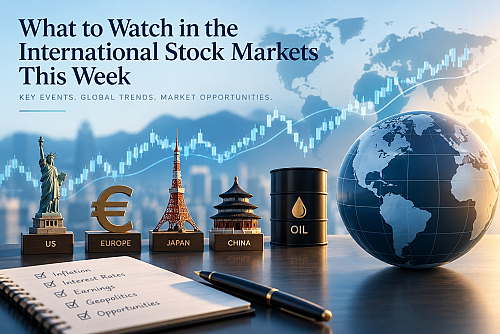
International Stock Markets: What to Watch This Week

U.S. Treasury Yields Rise as Inflation and Fiscal Pressures Reshape Bond Markets

European Markets: Trade and Employment Offer Support as Stocks Pause Near Highs

U.S. Inflation Cools in July: What It Means for the Economy

Gold Holds Near Two-Month High as Investors Await U.S. Inflation Data

Financial Markets This Week: Inflation, Consumer Spending and AI Earnings in Focus

Emerging Markets Learn That AI-Driven Rallies Come with Higher Risks

Global Markets Weekly: Earnings Support Stocks as Investors Look Ahead to the Next Catalysts