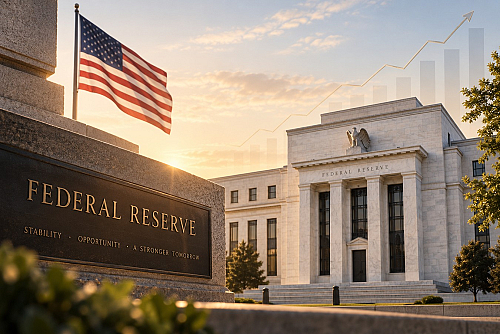
The US Federal Reserve kept interest rates unchanged on October 28, maintaining its benchmark federal funds rate at 3.75%–4.00%. The decision was widely anticipated, but the message behind it was important: the battle against inflation is not yet over, and the path of monetary policy remains uncertain.
A pause, not a return to easier money
The Fed adopted a cautious approach, choosing to assess incoming economic data before making its next move. Policymakers upgraded their assessment of US economic activity, describing growth as strong, while acknowledging that inflation remains elevated and above the central bank’s 2% target.
The decision was not unanimous. Two policymakers favoured a 0.25 percentage-point rate increase, highlighting concerns that persistent inflation, resilient demand and higher energy costs could require further monetary tightening.
Fed Chair Kevin Warsh avoided committing to a specific policy path, leaving future decisions dependent on how inflation and economic conditions evolve. Markets are therefore facing the possibility of another rate increase before the end of the year, rather than the rate cuts that many investors had previously hoped for.
What does this mean for financial markets?
For equity investors, the prospect of interest rates remaining elevated for longer presents a challenge, particularly for highly valued growth and technology companies. Higher borrowing costs can put pressure on valuations and make future earnings less attractive when discounted to their present value.
Bond investors must also remain alert. Persistent inflation could push government bond yields higher, putting downward pressure on existing bond prices. At the same time, higher yields may create more attractive entry points for investors building long-term fixed-income portfolios.
The implications extend beyond the United States. Changes in US monetary policy can influence global capital flows, the US dollar and financing conditions across emerging markets, including Central and Eastern Europe.
The investment outlook: data will drive the next move
The Fed’s latest decision reinforces the importance of distinguishing between expectations and economic reality. A resilient economy may support corporate earnings, but persistent inflation could limit the scope for monetary easing and increase market volatility.
Investors should focus on upcoming inflation figures, economic growth, and labour-market indicators to assess whether the Fed is likely to maintain its current stance or tighten policy further.
The bottom line: The Federal Reserve has chosen to wait, but it has not removed the risk of higher interest rates. For investors, disciplined portfolio diversification, careful valuation analysis, and a long-term investment horizon remain essential in an environment where both inflation and monetary policy continue to shape market returns.
This article is for informational purposes only and does not constitute investment advice or a recommendation to buy or sell any financial
instrument.