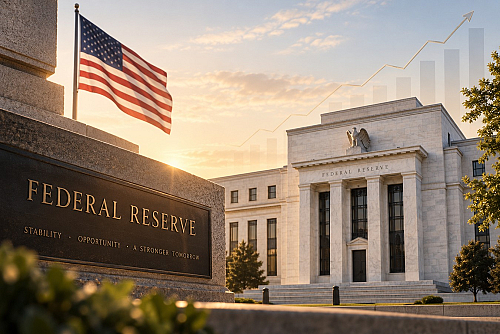
The Federal Reserve is operating under increasing internal division just weeks ahead of its December 9–10 meeting, as the aftermath of a prolonged U.S. federal government shutdown has left critical economic data delayed or missing.
• With agencies such as the U.S. Bureau of Labor Statistics and the U.S. Bureau of Economic Analysis having paused or curtailed data collection during the shutdown, key indicators on employment, inflation, retail consumption, and growth are either late, unreliable, or simply unavailable.
• Two distinct camps are forming within the Fed:
One group, pointing to signs of labour-market weakness, argues for immediate further rate cuts to support the economy.
The other group, concerned that inflation remains stubbornly elevated and that data gaps compromise their visibility, is urging greater caution and delaying additional easing.
• Because of the data ambiguity, Fed Chair Jerome Powell has flagged that a December rate cut is not guaranteed.
• The policy mismatch and uncertainty are influencing markets: while a Reuters poll shows a majority of economists expect a rate cut in December, the widening internal disagreement and opaque data make this outcome less certain.
Implications for investors:
• The lack of clear economic signals means the Fed may adopt a “wait-and-see” approach, increasing the probability of no further easing or only modest action in December.
• Market pricing of fed-funds futures and fixed-income positioning may need to be adjusted to reflect the increased likelihood of a pause rather than a cut.
• For wealth-management strategy:
Scenario planning matters: prepare for both a cut and a no-cut outcome.
The inflation risk (often under-weighted in recent years) remains alive and may require sustained hedging (e.g., inflation-linked bonds, real assets).
Monetary policy uncertainty may enhance the value of alternative diversification and risk-management overlay.